.png)
Wind operations are built on execution. But not all delays come from major system limitations. Many of them come from everyday workflows, like updating reports, managing work orders, or tracking time across teams and sites.
Reports that don’t fully reflect what happened.
Work orders that don’t match how teams actually work.
Time tracking that takes longer than it should.
Individually, these issues might seem minor. But at scale, they add up.
As operations grow, these small gaps slow down workflows, reduce data quality, and make coordination harder across teams, sites, and contractors.
The result is not just inefficiency. It is time lost in every step of execution.
At Shoreline, we focus on removing this friction directly within the workflows teams rely on every day, helping teams execute faster and stay aligned with how operations actually run. Here’s a closer look at the new features now available in the platform.
Making Reports Reflect Reality
Reports are only valuable if they represent what actually happens in the field. But in many cases, key information is either missing or not displayed correctly. Activity totals are not always relevant, and inputs like weather conditions do not always translate into meaningful outputs.
With more flexible report configurations, teams can now control what is shown and ensure reports reflect real operational conditions.
This includes:
- Showing or hiding activity totals where relevant
- Displaying both numerical and descriptive weather data correctly
The result is clearer reporting that teams can trust without additional interpretation.
Keeping Activities Aligned with Reports
Reports and activities are closely connected, but they don’t always stay in sync.
When a report is unlocked or rejected, linked activities can remain locked, creating unnecessary friction and extra manual work.
With this update in the Shoreline platform, activities are automatically unlocked alongside the report, keeping workflows consistent and avoiding manual corrections
Work Orders That Match How You Work
Work orders are central to execution, but their outputs often do not reflect how teams structure their work. For example, when exporting a work order as a PDF, teams are often limited to fixed formats, even when their workflows rely on custom fields and different priorities.

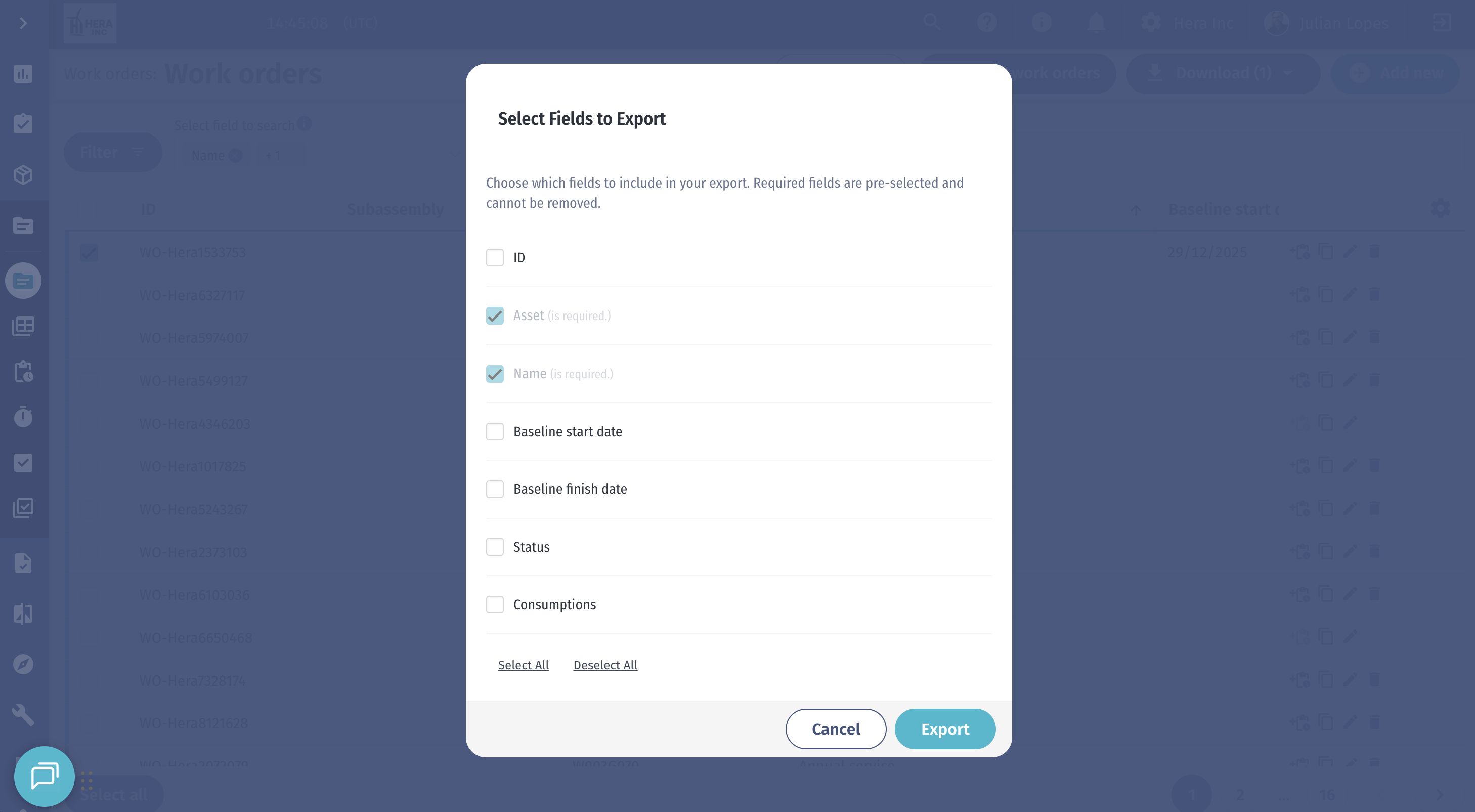
With configurable PDF exports, teams can now decide exactly what information is included and how it is structured.
This includes:
- Selecting which predefined fields appear
- Adding custom fields to the document
- Adjusting the structure before export
This ensures that exported work orders reflect the way teams actually operate, not the other way around.
Finding the Right Work Faster
As operations scale, finding the right information becomes more difficult. Teams need to quickly understand how activities connect to work packages and reports. Without that, filtering and analysis become manual and time-consuming.
With improved activity filtering, teams can now:
- Filter activities by work package
- Identify which activities are part of specific reports
- Analyse data more effectively through structured views
This reduces time spent searching and makes it easier to act on the right information.
Clear Ownership Across Teams and Contractors
Wind operations involve multiple organisations working together. But in day-to-day operations, it is not always clear who owns what. That lack of clarity makes coordination harder and reporting less accurate.

By introducing an organisation field across work packages, work orders, defects, permits, and personnel, teams can clearly define responsibility.
This improves:
- Coordination between internal teams and external contractors
- Reporting accuracy
- Overall operational clarity
Faster Time Tracking Without the Friction
Time tracking should be simple. But when tools are inconsistent across platforms, it quickly becomes frustrating. Technicians and coordinators often rely on mobile workflows that are not fully replicated on the web, slowing things down and creating inconsistencies.
With a new Quick Add experience on web, time registration now follows the same intuitive flow as mobile.
This includes:
- A familiar and consistent user experience
- Faster activity registration
- Built-in validation to prevent duplicate entries
The result is less time spent on administrative tasks and more time focused on execution.
Driving Better Execution at Scale
Individually, these improvements solve specific challenges. Together, they make everyday workflows faster, clearer, and more reliable.
Less time spent searching.
More consistent data.
Greater confidence in reports and planning.
Because scaling wind operations is not just about managing complexity. It is about making sure execution remains smooth as operations grow.
If you want to see how this works in practice, you can explore it further or walk through it with our team. If you have questions or want to discuss your setup, get in touch.